Bore Diameter
Measure tube inner diameter using caliper inside jaws.
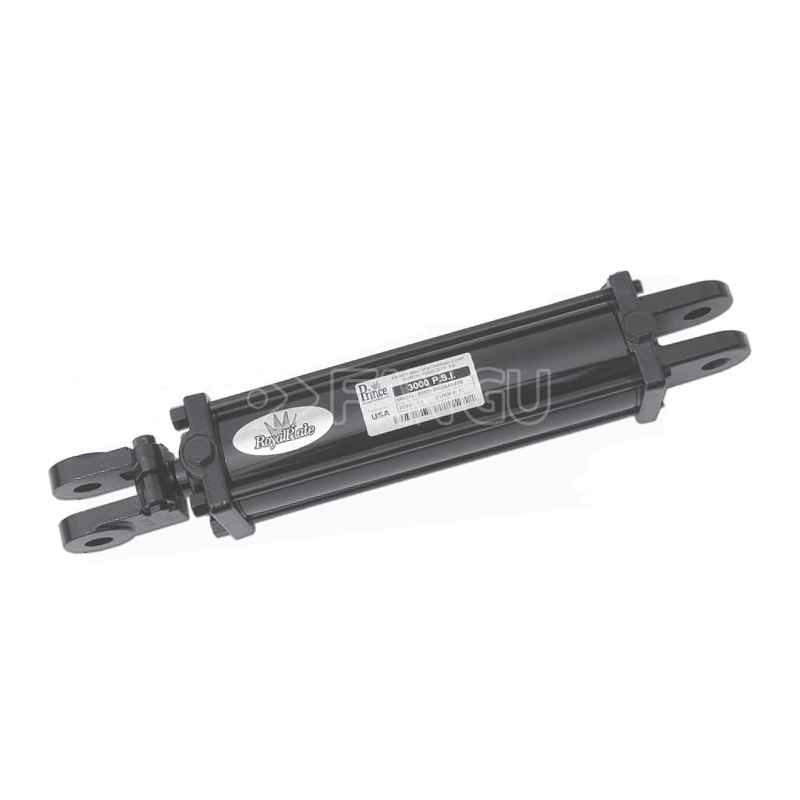
Prince 2500 PSI Tie-Rod Line is a tie-rod hydraulic cylinder series with a nominal pressure rating of Rated 2,500 psi. Bore sizes range from 2.00–5.00 in, with rod diameters from 1.000–1.750 in, depending on configuration.
Fangu manufactures replacement hydraulic cylinders for selected Prince 2500 PSI Tie-Rod Line models. Replacement suitability is reviewed against the original model reference, bore, rod diameter, stroke, mounting, port connections, and operating requirements.
| Cylinder Construction | Tie-rod cylinder |
|---|---|
| Function Mode | Double Acting |
| Rod Configuration | Single Rod |
| Bore Diameter | 2.00–5.00 in |
| Rod Diameter | 1.000–1.750 in |
| Stroke Length | Model-specific |
| Nominal Pressure | Rated 2,500 psi |
| Port Size Options | #8 (3/4-16), #10 (7/8-14) |
| Port Type Options | SAE ORB |
| Mounting Options | Clevis Ends |
|---|---|
| Rod End Options | Clevis Rod Ends |
| Dimensional Standard | |
| Port Size Options | #8 (3/4-16), #10 (7/8-14) |
| Port Type Options | SAE ORB |
| Port Position Options | Top, Side |
| Mounting Type | Piston Rod End Type | ||
|---|---|---|---|
| Port Size | Port Type | ||
| Port Position | Dimensional Standard |
| Temperature Range | Not Specified by OEM | Cushioning Options | Not Listed as Standard Option |
|---|---|---|---|
| Hydraulic Fluid | Petroleum-Based Hydraulic Fluid | ||
| Seal Type Options | PU U-Cup Rod, O-Ring/Backup Washer Piston | ||
| Model Parameters | |||
|---|---|---|---|
| Cylinder Construction | |||
| Bore Diameter | Function Mode | ||
| Rod Diameter(s) | Rod Configuration | ||
| Stroke | Nominal Pressure | ||
| Operating Conditions & Options | |||
| Temperature Range | Not Specified by OEM | Cushioning | |
| Hydraulic Fluid | |||
| Seal Type | |||
Can't find your exact OEM model? Measure your existing cylinder to help identify a suitable replacement.
Measure tube inner diameter using caliper inside jaws.
Measure rod outer diameter vertically with outer jaws.
Measure the rod travel from fully retracted to fully extended.
Measure center-to-center distance between mounting pins.
Tell us your requirements. Our engineering team will review your inquiry and respond promptly.
Match the OEM model code first, then verify bore, rod diameter, stroke, mounting style, port thread, port position and nominal pressure against the installed machine. A series name alone does not confirm dimensional or functional interchangeability.
Hydraulic cylinder selection guide.Confirm bore, rod diameter, stroke, mounting dimensions, retracted length and extended length from the original cylinder or drawing. One series can contain several mounting, rod-end and port arrangements, so approve the replacement from measured dimensions rather than the series label alone.
Bore, rod diameter and stroke guide.Treat Rated 2,500 psi as the series rating, not automatic approval for every application. Check peak pressure, duty cycle, temperature, hydraulic fluid, load direction and the required safety margin before confirming the cylinder.
Hydraulic cylinder force calculation guide.Match the mounting code, pin or flange geometry, rod-end thread, port size, port type and head/cap port positions to the installed cylinder. A mismatch can change pin centers, hose routing, available clearance or installation loads even when the bore and stroke are correct.
Mounting and port selection checks.