Bore Diameter
Measure tube inner diameter using caliper inside jaws.
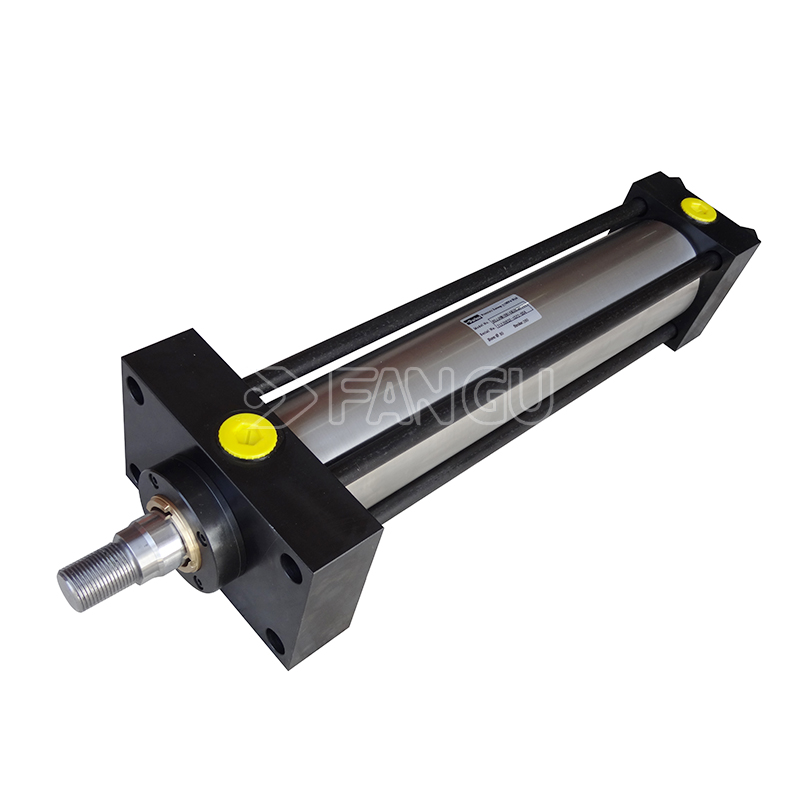
Parker Series HMD is a tie-rod hydraulic cylinder series with a nominal pressure rating of Max. 210 bar. Bore sizes range from Ø25–200 mm, with rod diameters from Ø12–140 mm, depending on configuration.
Fangu manufactures replacement hydraulic cylinders for selected Parker Series HMD models. Replacement suitability is reviewed against the original model reference, bore, rod diameter, stroke, mounting, port connections, and operating requirements.
| Cylinder Construction | Tie-rod cylinder |
|---|---|
| Function Mode | Single Acting, Double Acting |
| Rod Configuration | Single Rod, Double Rod |
| Bore Diameter | Ø25–200 mm |
| Rod Diameter | Ø12–140 mm |
| Stroke Length | Any practical stroke |
| Nominal Pressure | Max. 210 bar |
| Port Size Options | G1/4, G3/8, G1/2, G3/4, G1, G1 1/4, M14×1.5, M18×1.5, M22×1.5, M27×2, M33×2, M42×2 |
| Port Type Options | BSPP, ISO 9974-1 Metric Thread, ISO 6149 Metric Thread |
| Mounting Options | JJ, HH, C, SBd, DD |
|---|---|
| Rod End Options | 1 Male Rod-End Thread per Bore |
| Dimensional Standard | DIN 24554 |
| Port Size Options | G1/4, G3/8, G1/2, G3/4, G1, G1 1/4, M14×1.5, M18×1.5, M22×1.5, M27×2, M33×2, M42×2 |
| Port Type Options | BSPP, ISO 9974-1 Metric Thread, ISO 6149 Metric Thread |
| Port Position Options | Top, Right, Bottom, Left |
| Mounting Type | Piston Rod End Type | ||
|---|---|---|---|
| Port Size | Port Type | ||
| Port Position | Dimensional Standard | DIN 24554 |
| Temperature Range | -20 to +80 °C (standard seals) | Cushioning Options | Optional at Either End or Both Ends |
|---|---|---|---|
| Hydraulic Fluid | Mineral Oil (HH, HL, HLP, HLP-D, HM, HV) | ||
| Seal Type Options | Standard, LoadMaster, Low-Friction (Groups 1, 2, 5, 6, 7) | ||
| Model Parameters | |||
|---|---|---|---|
| Cylinder Construction | |||
| Bore Diameter | Function Mode | ||
| Rod Diameter(s) | Rod Configuration | ||
| Stroke | Nominal Pressure | ||
| Operating Conditions & Options | |||
| Temperature Range | -20 to +80 °C (standard seals) | Cushioning | |
| Hydraulic Fluid | |||
| Seal Type | |||
Can't find your exact OEM model? Measure your existing cylinder to help identify a suitable replacement.
Measure tube inner diameter using caliper inside jaws.
Measure rod outer diameter vertically with outer jaws.
Measure the rod travel from fully retracted to fully extended.
Measure center-to-center distance between mounting pins.
Tell us your requirements. Our engineering team will review your inquiry and respond promptly.
Match the OEM model code first, then verify bore, rod diameter, stroke, mounting style, port thread, port position and nominal pressure against the installed machine. A series name alone does not confirm dimensional or functional interchangeability.
Hydraulic cylinder selection guide.Confirm bore, rod diameter, stroke, mounting dimensions, retracted length and extended length from the original cylinder or drawing. One series can contain several mounting, rod-end and port arrangements, so approve the replacement from measured dimensions rather than the series label alone.
Bore, rod diameter and stroke guide.Treat Max. 210 bar as the series rating, not automatic approval for every application. Check peak pressure, duty cycle, temperature, hydraulic fluid, load direction and the required safety margin before confirming the cylinder.
Hydraulic cylinder force calculation guide.Match the mounting code, pin or flange geometry, rod-end thread, port size, port type and head/cap port positions to the installed cylinder. A mismatch can change pin centers, hose routing, available clearance or installation loads even when the bore and stroke are correct.
Mounting and port selection checks.