
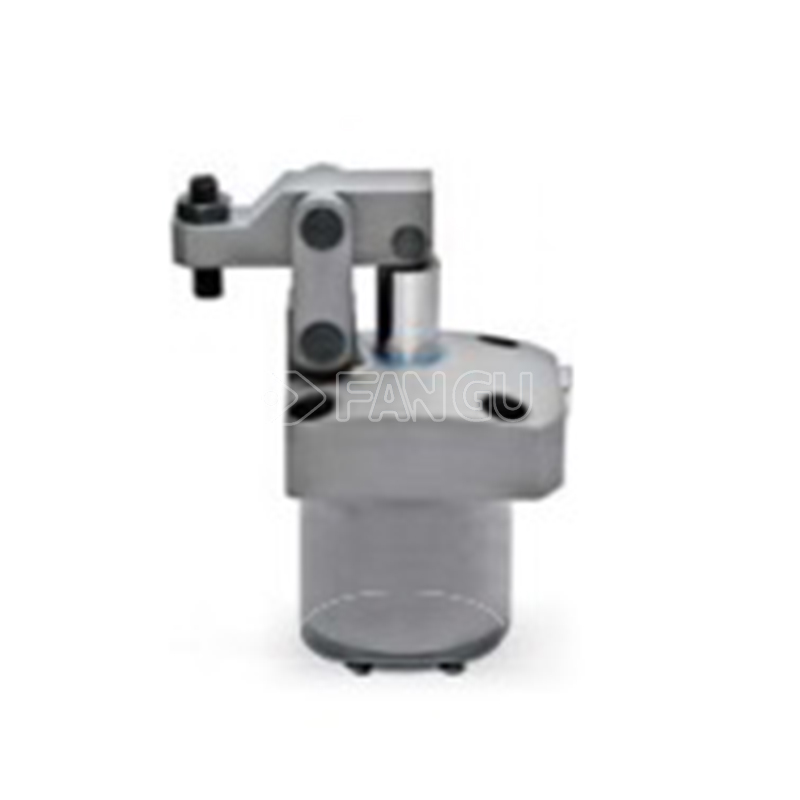
Japan Pascal Link clamp 7MPa Single acting Compact model CLN-N CLN04-LN CLN04-FN CLN04-RN CLN05-LN CLN05-FN CLN05-RN CLN06-LN CLN06-FN CLN06-RN

The Pascal CLN series is a 7MPa single-acting hydraulic link clamp from PASCAL Japan, available in two variants: Unclamp Sensing Type (CLN‑B) and Compact Type (CLN‑N). Featuring hydraulic clamping and spring return with a built-in 帕尔 detector for precise unclamp terminal detection, it eliminates chip buildup issues with an internal sensor design.

Main Models: CLN04-LN CLN04-FN CLN04-RN CLN05-LN CLN05-FN CLN05-RN CLN06-LN CLN06-FN CLN06-RN etc.

    Product Introduction: Pascal CLN Series 7MPa Single‑acting Link Clamp (Unclamp Sensing Type / Compact Type)

    Product Overview

    The Pascal CLN series is a 7MPa single-acting hydraulic link clamp from PASCAL Japan, available in two variants: Unclamp Sensing Type (CLN‑B) and Compact Type (CLN‑N). Featuring hydraulic clamping and spring return with a built-in 帕尔 detector for precise unclamp terminal detection, it eliminates chip buildup issues with an internal sensor design. Ideal for precision machining, automated production lines, rapid mold change, and high-density fixturing, it serves as a core fixture for unmanned production and automated stations.

    Q: What’s the MOQ of customized tie-rod cylinder?

    A: Depends on the style of tie-rod. We would like to cast and forge once the quantity above 100 pcs.

    Q:What’s the lead time of customized tie-rod cylinder?

    A:  Well, it depends on the quantity and style of hydrualic cylinders, at least 60 days if we make casting and forging, at least 35 days by maching.

    Q: Are you the manufacturer of hydrualic cylinder?

    A: Sure, we are the manufacutuer and trading of hydraulic cylinder.

    Q: What is the difference between double acting and single acting cylinders?own controlled by the pump or the valve or is it only one speed?

    A: Double-Acting-have a port at each end, supplied with hydraulic fluid for both the retraction and extension. Single-Acting-hydraulic fluid enters through

    a port at one end of the cylinder, which extends the rod by means of area difference. An external force or gravity returns the piston rod.

    Q: I have a drawing, could you customized cylinder as my drawing?

    A: Sure. Show us the drawing, we will quote for you soonest.

    Q: Could you make the cylinder which is not on the above data sheet?

    A: Yes, we make and supply a wide rang of hydrualic cylinders as a proffetional manufacture, there are only some kinds of them show on the website. Freely contact us to get more information.

    • 7MPa high-pressure single-acting drive: Hydraulic clamping + spring return for simple structure, low failure rate, and low maintenance.
    • Unclamp terminal sensing (CLN‑B): Built-in 帕尔 detector for accurate unclamp detection, supporting automated interlocking and fault alarms.
    • Internal sensor design: Avoids sensor failure caused by chip/coolant buildup in harsh machining environments.
    • Linkage lever amplification: Delivers high clamping force in a compact design with high rigidity and low vibration.
    • Compact layout (CLN‑N): Ultra-compact size for narrow spaces and high-density fixturing.
    • Multi-directional mounting: Supports forward (F), left (L), and right (R) mounting for flexible layout.
    • High protection sealing: Resists chips, coolant, and cutting fluids.
    • High safety margin: Rated at 7MPa with 10.5MPa proof pressure for overload protection.

    Typical Applications

    • Precision machine tool machining: Quick clamping of workpieces for CNC lathes, machining centers, and grinders.
    • Automated production lines: Integrated with manipulators and conveyor lines for automated clamping, positioning, and unclamp status monitoring.
    • Rapid mold change: High-efficiency clamping for die steel, cavities, and mold bases for high-frequency mold change.
    • High-density fixturing: Compact installation for narrow spaces and multi-fixture layouts.
    • Harsh environment clamping: Internal sensor avoids detection failure in coolant/chip-prone environments.