
How to activate a hydraulic cylinder?

Power in Motion: The Essential Guide to Activating a Hydraulic Cylinder
In the heart of countless machines—from towering construction cranes to precise manufacturing presses—lies a moment of controlled transformation: the activation of a hydraulic cylinder. This process, where pressurized fluid converts into powerful, linear force, is fundamental to modern industry. But achieving smooth, reliable, and safe activation is more than just flipping a switch; it’s a symphony of engineering, preparation, and precision control.
The Core Principle: From Fluid to Force
At its essence, activating a hydraulic cylinder involves directing pressurized hydraulic oil into one of its ports to move the piston and rod. The basic control is achieved through a directional control valve, typically operated manually, electronically, or pneumatically.
A Step-by-Step Overview of Activation:
System Priming & Preparation: Before any activation, the entire hydraulic system must be checked. This includes ensuring proper hydraulic fluid level and cleanliness, verifying all connections are secure, and confirming the cylinder is correctly mounted and aligned. Any load should be properly secured.
Powering the Pump: The hydraulic power unit is started, driving the pump to generate flow and pressure. Relief valves in the system are set to protect components from pressure surges.
Controlling the Direction: To extend the cylinder, the directional valve is shifted to port pressurized fluid into the cap-end (the side with the rod) of the cylinder. The fluid pressure acts on the larger surface area of the piston, creating force to push the rod out. Fluid from the opposite side (rod-end) is allowed to return to the reservoir.
Executing the Stroke: The rod extends until it completes its stroke, meets the load resistance set by the system pressure, or is stopped by a control signal. To retract the cylinder, the valve is shifted to send pressure to the rod-end. The smaller surface area on this side requires less fluid to move but may generate higher speeds (with less force) for the return stroke.
Stopping and Holding: The valve is returned to its neutral position, blocking flow to and from the ports and locking the cylinder in place. For critical applications, counterbalance valves or pilot-operated check valves are used to safely hold loads.
Beyond the Basics: The Critical Role of Precision and Safety
Improper activation can lead to catastrophic failure. Common risks include:
Cavitation: Occurs if the rod retracts too quickly without sufficient fluid intake, creating voids that implode and damage internal surfaces.
Shock Loads: Sudden starts/stops or hitting mechanical stops can generate damaging pressure spikes.
Misalignment: Side loads during activation cause premature seal wear and rod scoring.
Contamination: Ingress of particles during maintenance or from a poorly maintained system is the leading cause of seal and component wear.
The Foundation of Reliability: Rigorous Testing Before Activation
The true guarantee of a smooth, dependable activation cycle begins long before the cylinder is installed on a machine. It is forged in the manufacturer’s commitment to quality control. For a professional manufacturer like Fujian Fangu Hydraulic Co., Ltd., this commitment is non-negotiable.
“Activation in the field is the final test of our engineering,” says a Quality Assurance Manager at Fujian Fangu Hydraulic. “To ensure success, every single cylinder we produce—whether it’s a standard hydraulic cylinder, a high-duty metallurgical cylinder for steel mills, a robust engineering cylinder for construction, or a precision mold cylinder—undergoes a stringent baptism before delivery.”
The company’s protocol mandates that every unit is subjected to a comprehensive, multi-stage pressure test:
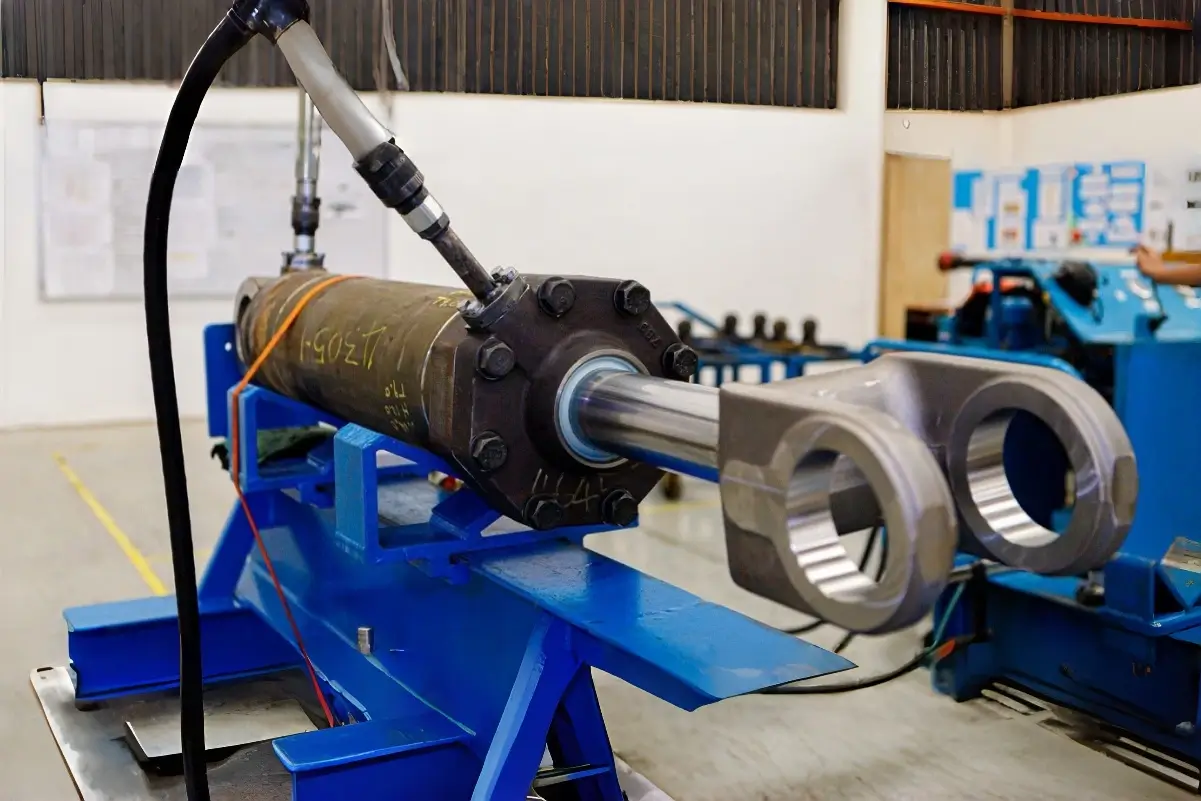
Proof Pressure Test: Each cylinder is pressurized to 1.5 times its rated working pressure and held to verify the integrity of welds, the barrel, and end caps. There must be no permanent deformation or leakage.
Holding Pressure Test: At its full rated working pressure, the cylinder is held in position for an extended period to check for any internal leakage past the piston seals, which would cause drift.
External Leakage Check: Every seal point—around the rod gland, port connections, and static seals—is meticulously inspected for any sign of weeping or leaking fluid under pressure.
“Only after passing these rigorous tests is a cylinder cleared for delivery,” the manager emphasizes. “This process is the cornerstone of our customization service as well. When we design a custom solution for a client’s unique application, the performance benchmarks in our test lab are tailored to match their specific operating pressure and duty cycle requirements.”
Conclusion: Activation as a Culmination
Activating a hydraulic cylinder is the moment potential energy becomes kinetic work. Ensuring this process is efficient, safe, and repeatable for millions of cycles demands excellence in two areas: proper system operation and maintenance by the end-user, and, fundamentally, excellence in initial design and manufacturing.
By specializing in key cylinder types for major industries and building its reputation on a foundation of uncompromising pressure testing, Fujian Fangu Hydraulic Co., Ltd. delivers more than just components. They deliver certified reliability, providing clients with the confidence that every cylinder is primed and proven for flawless activation from its very first cycle in the field, powering productivity and performance where it matters most.